
The India–Pakistan Conflict: Historical Roots, Geopolitical Dynamics, and Prospects for Resolution
Introduction
The India–Pakistan conflict stands as one of the most intractable and volatile geopolitical disputes in the post-colonial era. Rooted in the turbulent partition of British India in 1947, the conflict has evolved into a multifaceted struggle encompassing territorial claims, national identity, military posturing, and global diplomacy. Central to this enduring dispute is the contested region of Jammu and Kashmir, which continues to ignite hostilities and obstruct peaceful resolution. This article provides a comprehensive academic analysis of the historical origins of the conflict, the persistent barriers to peace, regional and international implications, and the prospects for de-escalation. The role of neighbouring states, such as Myanmar, is also considered in light of shifting regional alignments.
Historical Foundations of the Conflict
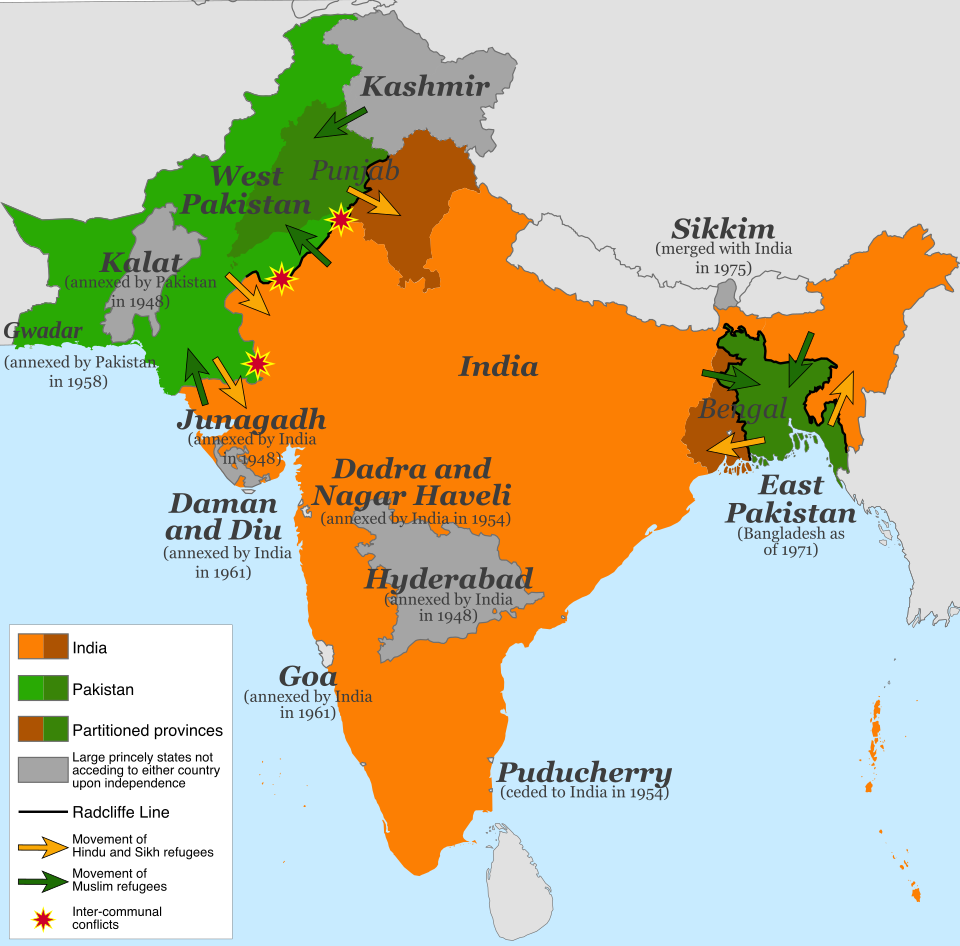
The genesis of the India–Pakistan conflict lies in the partition of British India in August 1947, which led to the creation of two sovereign states: the Dominion of India and the Dominion of Pakistan. The division, premised on religious demographics, resulted in mass displacement, sectarian violence, and complex territorial disputes. Among the most contentious issues arising from partition was the status of Jammu and Kashmir, a princely state with a Muslim-majority population ruled by a Hindu monarch, Maharaja Hari Singh.
Initially opting for independence, the Maharaja acceded to India following an invasion by tribal forces supported by Pakistan. This accession precipitated the First Indo–Pakistani War (1947–1948), which concluded with a United Nations-brokered ceasefire and the establishment of the Line of Control (LoC). Despite the ceasefire, Jammu and Kashmir remains bifurcated between Indian-administered and Pakistani-administered regions, with both nations claiming the territory in its entirety.
The conflict has since witnessed further escalation through subsequent wars, notably:
- The Second Indo–Pakistani War (1965), again centred on Kashmir;
- The Third Indo–Pakistani War (1971), culminating in the creation of Bangladesh;
- The Kargil Conflict (1999), involving Pakistani incursions into Indian-held territory.
These episodes reflect a deep-rooted rivalry shaped by historical grievance, religious nationalism, and strategic mistrust.
Enduring Barriers to Peace
Despite multiple rounds of dialogue and intermittent ceasefires, several entrenched factors continue to obstruct a durable resolution to the conflict:
1. The Kashmir Dispute
The region of Jammu and Kashmir remains the core issue in India–Pakistan relations. India regards Kashmir as an integral and sovereign part of its territory, particularly following the abrogation of Article 370 in 2019. In contrast, Pakistan maintains that Kashmir is a disputed region whose status must be resolved through a plebiscite under international supervision.
2. Cross-Border Terrorism
India accuses Pakistan of sponsoring and harbouring militant groups, such as Jaish-e-Mohammed and Lashkar-e-Taiba, which operate in the Kashmir Valley. Notable incidents—including the 2001 Indian Parliament attack, the 2008 Mumbai attacks, and the 2019 Pulwama bombing—have severely undermined trust and led to heightened military tensions.
3. Nuclear Deterrence and Military Posturing
Both nations possess nuclear weapons, which elevates the risks of escalation. Although nuclear deterrence has arguably prevented full-scale wars, it has also engendered a fragile strategic balance, making conventional military engagements and skirmishes more perilous.
4. Domestic Nationalism and Political Calculations
Nationalist rhetoric in both countries sustains public hostility and constrains diplomatic flexibility. In India, political narratives emphasising territorial sovereignty dominate electoral discourse. In Pakistan, the Kashmir issue remains central to national identity and military legitimacy.
5. External Geopolitical Influences
Global powers—particularly China, the United States, and Russia—hold strategic interests in South Asia. Their competing alliances and defence partnerships with India or Pakistan complicate multilateral peace initiatives, as diplomatic overtures often intersect with broader global rivalries.
Regional and Global Implications
The India–Pakistan conflict reverberates across South Asia and beyond, affecting regional security, humanitarian conditions, and economic development.
Impact on India and Pakistan
- Economic Burden: Both nations dedicate substantial resources to defence expenditure, often at the expense of social services and infrastructure.
- Humanitarian Crisis in Kashmir: Civilians in Kashmir face frequent disruptions, curfews, and violence. Reports of human rights violations, media restrictions, and limited access to healthcare and education remain widespread.
- Political Instability: Periodic surges in cross-border violence often disrupt domestic political agendas and provoke civil unrest in border states.
Global Ramifications
- Nuclear Security Threats: The presence of nuclear weapons in an unresolved territorial dispute raises concerns over accidental or intentional escalation.
- Economic Instability: Foreign investment and trade flows in the region are adversely impacted by geopolitical uncertainty.
- Diplomatic Challenges: Institutions such as the United Nations and South Asian Association for Regional Cooperation (SAARC) have struggled to mediate, largely due to diverging national interests and a lack of enforceable authority.
International Responses and Alignments
Global actors have adopted a spectrum of stances with regard to the conflict:
Pro-India Supporters
The United States, Israel, France, and Japan have increasingly aligned with India, especially in the realm of counterterrorism, economic cooperation, and strategic partnerships such as the Quadrilateral Security Dialogue (Quad).
Pro-Pakistan Supporters
China, Turkey, Saudi Arabia, and the United Arab Emirates maintain strong bilateral ties with Pakistan, including economic investments, defence cooperation, and diplomatic support in international fora.
Non-Aligned but Engaged States
Countries such as Russia, Iran, and Bangladesh have taken a neutral stance, calling for peaceful negotiations and regional dialogue while avoiding overt alignment with either side. These states often serve as informal intermediaries or supporters of multilateral diplomacy.
Myanmar’s Geopolitical Posture
Although often overlooked in discussions of the India–Pakistan conflict, Myanmar’s strategic position renders its stance increasingly relevant. Historically, Myanmar has maintained a neutral position, preoccupied with its own internal conflicts and governance challenges. However, recent regional dynamics suggest a subtle recalibration.
Myanmar shares a long border with India’s northeastern states, particularly Mizoram, Manipur, and Nagaland, regions known for ethnic insurgencies and refugee flows. The military-led government under General Min Aung Hlaing has deepened relations with China, a key stakeholder in Pakistan’s regional calculus through projects such as the China–Pakistan Economic Corridor (CPEC). These developments have strategic implications for India’s security and diplomatic outreach in Southeast Asia.
While Myanmar has not formally aligned with either India or Pakistan, its border security challenges and growing economic and military engagement with China necessitate close monitoring of South Asian tensions. The country’s indirect involvement manifests in regional counterinsurgency operations, refugee coordination, and trilateral security dialogues with India and China.
Pathways Towards Peace and Stability
Despite entrenched obstacles, a number of policy avenues offer potential for de-escalation and dialogue:
- Sustained Diplomatic Engagement: Renewed bilateral talks, supported by neutral mediators or international organisations, may help rebuild trust and outline frameworks for cooperation.
- Economic Interdependence: Joint ventures, trade initiatives, and people-to-people exchanges could foster shared interests and reduce adversarial posturing.
- Demilitarisation Initiatives: A phased withdrawal of troops from contested zones in Kashmir, monitored by independent observers, could alleviate immediate tensions.
- Counterterrorism Collaboration: Cooperative security arrangements to dismantle non-state militant networks would enhance mutual security and improve global perceptions.
- Track-II Diplomacy and Civil Society Engagement: Academic, cultural, and grassroots dialogue may help counteract nationalist propaganda and lay the groundwork for a peace-oriented public discourse.
Conclusion
The India–Pakistan conflict remains one of the world’s most enduring and complex geopolitical disputes. Born of partition-era trauma and sustained by nationalism, security dilemmas, and external influences, the conflict continues to defy resolution. While repeated efforts at peace have been made, they are frequently undermined by mistrust, military provocations, and diverging political agendas. As the strategic landscape evolves—with actors such as Myanmar becoming increasingly significant—the pathway to sustainable peace lies in mutual political will, regional cooperation, and a long-term commitment to conflict transformation. Only through such means can South Asia hope to transition from confrontation to coexistence.