
Catalonia’s Sovereignty Movement: Historical and Strategic Implications
Introduction
Catalonia’s push for independence has emerged as one of Europe’s most significant challenges to state sovereignty within a democratic framework. Rooted in cultural identity and political autonomy, the Catalan movement has tested the limits of Spain’s constitutional order and raised broader questions about self-determination in the European Union. While Spain’s central government maintains legal authority over the region, Catalonia’s demands for a binding referendum and international recognition continue to shape political discourse in Madrid, Brussels, and beyond. This article examines the historical roots of Catalonia’s independence movement, legal and political tensions, economic ramifications, and the wider implications for European unity and global separatist movements.
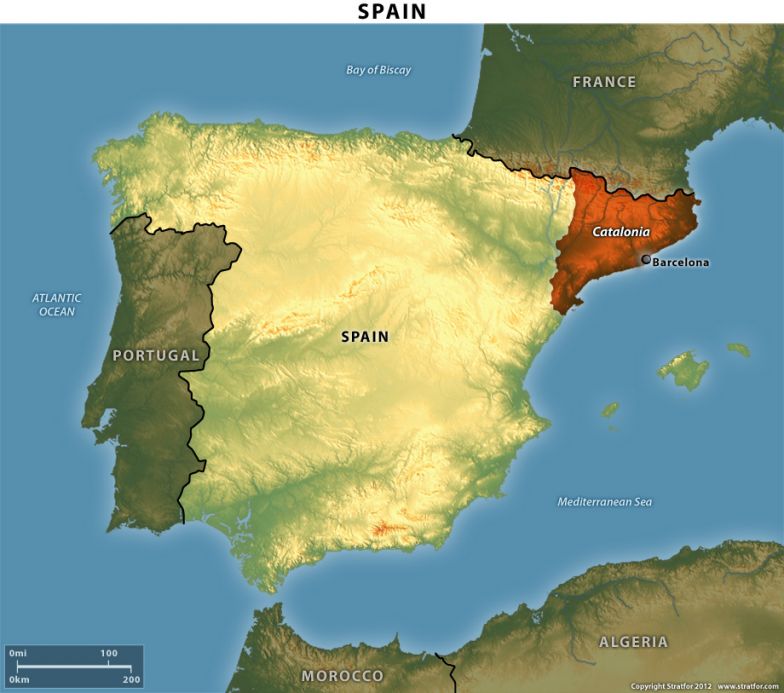
Historical Context and Foundational Causes
Catalonia’s distinct identity is anchored in its unique language, cultural heritage, and historical role within the Spanish Crown. Tensions between regional autonomy and central control have ebbed and flowed for centuries.
- Early Autonomy and Suppression:
- In the early modern period, Catalonia retained significant autonomy under the Crown of Aragon. However, following the War of the Spanish Succession (1701–1714), Catalonia’s institutions were suppressed under the Bourbon monarchy.
- Modern Autonomist Movements:
- The 20th century saw intermittent periods of self-rule, most notably during the Second Spanish Republic (1931–1939). Under Francisco Franco’s dictatorship (1939–1975), Catalan identity was heavily repressed.
- After Spain’s democratic transition, the 1978 Constitution granted Catalonia significant autonomy within a decentralised state structure. However, disputes over fiscal policy, cultural rights, and political representation persisted.
- 2017 Referendum and Crisis:
- On 1 October 2017, Catalonia held a unilateral referendum on independence, despite being declared unconstitutional by the Spanish Constitutional Court.
- The vote, marked by high turnout among pro-independence supporters and a boycott by unionists, resulted in a large majority favouring independence. However, Spain responded with legal action, invoking Article 155 to suspend regional autonomy and prosecute Catalan leaders.
Geopolitical and Economic Implications
Catalonia’s independence would have profound consequences not only for Spain’s territorial integrity but also for European economic and political cohesion.
- Economic Considerations:
- Catalonia accounts for approximately 20% of Spain’s GDP and is a key hub for tourism, manufacturing, and exports.
- Independence could destabilise financial markets, disrupt trade agreements, and require complex negotiations over debt, currency, and EU membership.
- Businesses and banks temporarily relocated headquarters during the 2017 crisis, signalling investor uncertainty.
- EU and International Responses:
- European Union: The EU firmly backed Spain’s territorial integrity, declaring that an independent Catalonia would automatically leave the EU and need to reapply for membership.
- Other States: Most countries supported Madrid’s constitutional stance, citing concerns about encouraging similar movements (e.g., Scotland, Flanders, Corsica).
- Global Recognition: Catalonia lacks international recognition and diplomatic support, in contrast to some other separatist movements with wider geopolitical leverage.
- Political and Strategic Considerations:
- A successful Catalan secession could set a precedent within Europe for challenging centralised authority via democratic mechanisms.
- Spain’s handling of the crisis—through judiciary and constitutional channels rather than negotiation—has prompted debates on democratic legitimacy versus legal order.
Security and Governance Post-Independence
The aftermath of a hypothetical Catalan independence would require substantial reorganisation of institutional, legal, and security arrangements.
- Governance Infrastructure:
- Catalonia already possesses devolved institutions, including a regional parliament and police force (Mossos d’Esquadra), but would need to create national-level institutions such as a central bank, diplomatic corps, and customs authority.
- Defence and Foreign Policy:
- Spain’s military currently oversees national defence. An independent Catalonia would face the challenge of creating defence agreements or establishing a national army.
- Entry into NATO or the EU would be politically and procedurally complex, especially given likely vetoes from Spain and possibly other member states facing separatist pressures.
- Legal Recognition and Institutional Transitions:
- Without legal recognition by Spain, Catalonia’s secession would be deemed illegal under both domestic and international law.
- The lack of mutual recognition impedes smooth transitions in legal, commercial, and diplomatic frameworks.
Potential Future Scenarios
The future of Catalonia’s independence movement remains contested, with multiple potential trajectories:
- Status Quo with Autonomy Disputes: Catalonia remains within Spain but continues to push for expanded fiscal and political powers.
- Constitutional Reform: Spain undertakes structural reforms to offer a federal model with clearer distribution of powers.
- Negotiated Referendum: A future Spanish government could allow a legally sanctioned referendum, similar to the UK’s approach with Scotland in 2014.
- Unilateral Escalation: Renewed attempts at unilateral secession could provoke deeper legal or civil conflict.
- Gradual Disengagement: Catalonia incrementally develops parallel institutions while avoiding outright secession, aiming for de facto sovereignty over time.
Conclusion
Catalonia’s independence movement underscores the tensions between democratic expression and constitutional legality in modern European states. While Spain’s firm legal stance has thus far prevented secession, the underlying cultural, economic, and political grievances remain unresolved. As with Québec and Scotland, Catalonia represents a critical case study in balancing regional identity with national unity. The choices made by Madrid and Barcelona in the years ahead will influence not only the future of the Spanish state, but also broader European debates on sovereignty, federalism, and the legitimacy of nationalist aspirations.