
Article 7
Contemporary Role, Secrecy, and Public Narratives: Delta Force in the 21st Century
Abstract
This article examines the contemporary role of the United States Army’s 1st Special Forces Operational Detachment-Delta (SFOD-D) within U.S. national security, focusing on the interaction between operational secrecy, legal oversight, and public narratives. It argues that the unit’s effectiveness depends not only on tactical proficiency but also on controlled visibility, disciplined governance, and the management of information in an era of ubiquitous media and automated content generation.
1. Introduction
In the 21st century, 1st Special Forces Operational Detachment-Delta operates in an environment characterised by persistent counter-terrorism, rapid information diffusion, and heightened scrutiny of military power. While the unit’s core missions remain consistent with its founding mandate, the conditions under which those missions are perceived and interpreted have changed markedly. This article addresses Delta Force’s contemporary role through three lenses: operational function, secrecy and oversight, and public narrative formation.
2. Contemporary Operational Role
2.1 Sustained Special Mission Employment
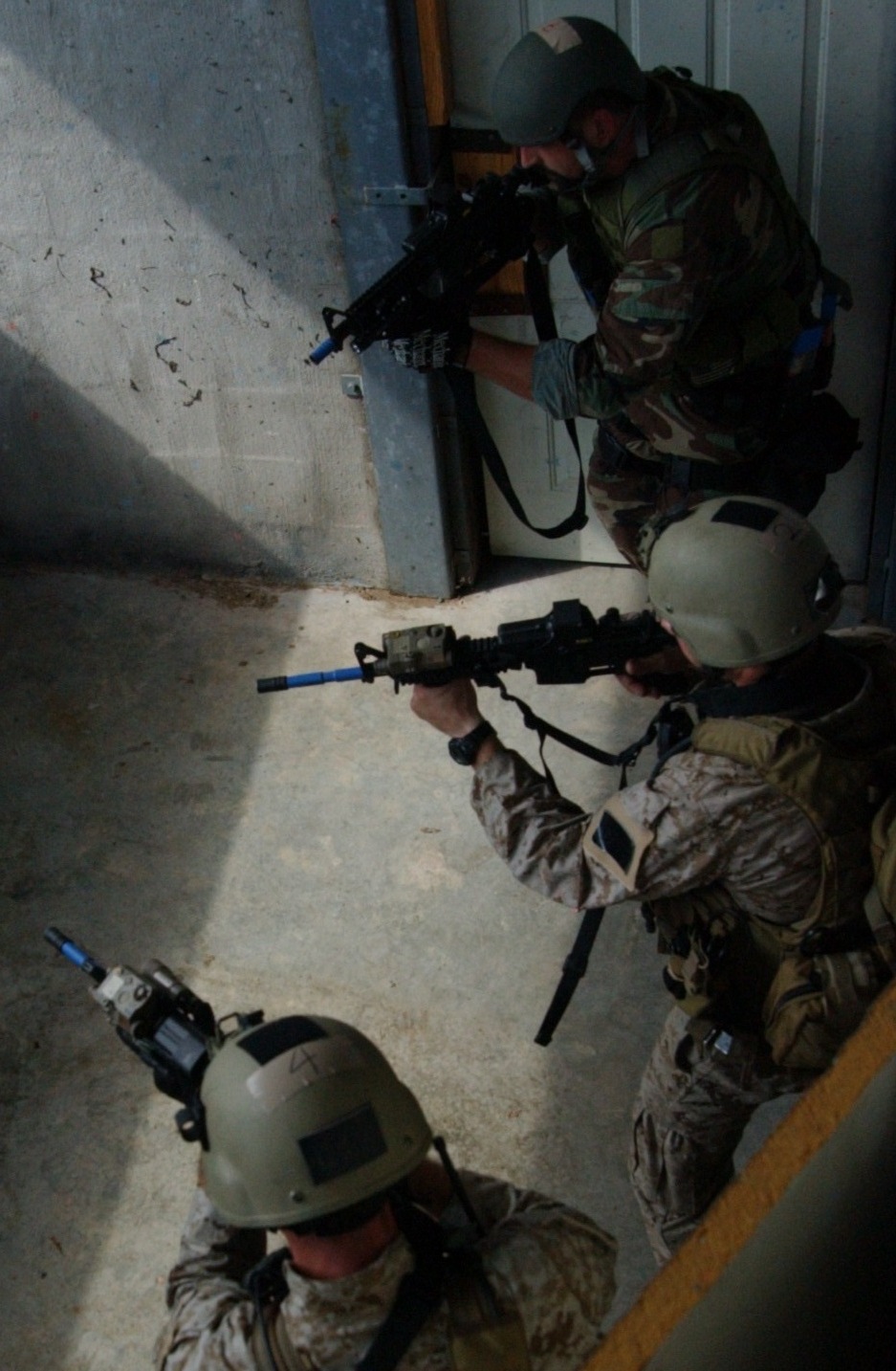
Delta Force continues to function as a special mission unit under Joint Special Operations Command (JSOC), contributing to intelligence-driven operations against high-value terrorist and insurgent targets. Its employment is characterised by:
- Persistent readiness rather than episodic activation
- Small, task-organised elements
- Integration with intelligence, aviation, and cyber-enabled targeting
- Emphasis on capture, exploitation, and network disruption
While specific deployments remain classified, authoritative sources confirm continued involvement in counter-ISIS and other counter-terrorism campaigns during the late 2010s and early 2020s (Joint Chiefs of Staff, 2020).



3. Secrecy as Institutional Design
3.1 Functional Rationale for Secrecy
Operational secrecy is central to Delta Force’s effectiveness. Classification protects:
- Personnel identities and families
- Methods, techniques, and procedures
- Diplomatic relationships with host nations
- Decision-making processes at executive level
Secrecy thus functions as a governance mechanism, not merely a tactical preference. As U.S. doctrine emphasises, special mission activities are deliberately shielded to preserve strategic flexibility and political control (Department of Defense, 2016).
3.2 Oversight and Accountability
Despite limited public visibility, Delta Force operates within established oversight frameworks, including:
- Executive authorisation through the Secretary of Defense and President
- Congressional oversight via armed services and intelligence committees
- Internal Department of Defense legal review
These mechanisms aim to balance secrecy with constitutional accountability, though their effectiveness remains a subject of scholarly debate.
4. Public Narratives and Media Representation
4.1 Popular Culture and Simplification
Delta Force has been extensively represented in popular media—books, films, and digital platforms—often as a symbol of unilateral military power. While such portrayals have increased public awareness, they frequently oversimplify legal constraints, joint integration, and political risk.
Works such as Black Hawk Down have contributed to public understanding of specific historical events, but they also illustrate the tendency to focus on tactical drama at the expense of institutional context (Bowden, 1999).
4.2 Misinformation and Automated Content
In the contemporary information environment, false or speculative claims—often amplified by automated systems—have increasingly been attributed to Delta Force. Assertions regarding unverified coups, assassinations, or regime-change operations exemplify the risks posed by epistemic drift, where secrecy creates space for unfounded narratives.
From an academic standpoint, such claims must be rejected unless corroborated by:
- Official statements
- Multiple independent journalistic investigations
- Documentary or judicial evidence
5. Analytical Implications
5.1 Strategic Utility and Constraint
Delta Force’s continued relevance reflects the enduring demand for precision military capability under tight political control. However, its effectiveness remains contingent on:
- Clear political objectives
- Legal clarity
- Proportional use of force
- Institutional restraint
Absent these conditions, even the most capable special mission unit risks strategic overextension.
5.2 Knowledge Limits in Scholarly Analysis
Scholars must acknowledge the structural limits of open-source research on special mission units. Responsible analysis therefore prioritises doctrine, governance, and confirmed historical cases over speculation regarding ongoing operations.
6. Conclusion
In the 21st century, Delta Force remains a central but deliberately obscured component of U.S. national security. Its contemporary role is defined less by visibility than by controlled application, where secrecy, oversight, and narrative discipline are as critical as tactical excellence. Understanding Delta Force today thus requires analytical restraint: recognising both its capabilities and the institutional boundaries that govern its use.
References
Bowden, M. (1999) Black Hawk Down: A Story of Modern War. New York: Atlantic Monthly Press.
Department of Defense (2016) Law of War Manual. Washington, DC: U.S. Department of Defense.
Joint Chiefs of Staff (2020) Joint Publication 3-05: Special Operations. Washington, DC: Department of Defense.
McRaven, W.H. (1995) Spec Ops: Case Studies in Special Operations Warfare. Novato, CA: Presidio Press.