
Québec’s Sovereignty Debate: Historical and Strategic Implications
Introduction
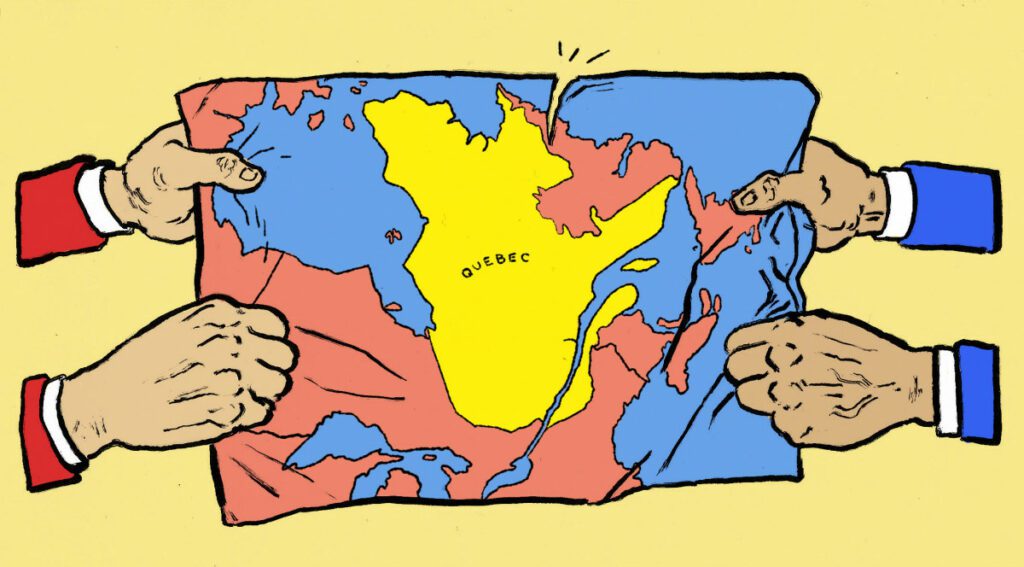
The question of Québec’s independence remains a cornerstone of Canadian politics, shaping constitutional debates, economic strategies, and cultural identity. While Québec operates within a stable democratic framework—unlike Taiwan, which faces external military threats—the movement for sovereignty continues to influence governance, policy, and national unity. This article examines Québec’s historical sovereignty debates, the broader political and economic ramifications of independence, and its place within the evolving landscape of global nationalist movements.
Historical Context and Foundational Causes
The roots of Québec’s independence movement trace back to longstanding tensions between French and English Canada. The province, home to a distinct francophone culture, has periodically sought political autonomy, citing concerns over linguistic preservation, economic self-determination, and historical grievances stemming from British colonial rule.
- The Quiet Revolution (1960s): This era marked Québec’s political and societal transformation, strengthening secular governance, expanding social welfare, and igniting nationalist sentiment. The emergence of the Parti Québécois (PQ) in 1968 institutionalised the sovereignty movement.
- Referendums on Sovereignty:
- 1980 Referendum: The PQ, led by René Lévesque, proposed a sovereignty-association model granting political independence while maintaining economic ties with Canada. The motion was rejected by 60% of voters.
- 1995 Referendum: A more divisive campaign resulted in a narrow defeat for independence—50.6% voted “No” and 49.4% “Yes.” The close result intensified national unity debates and triggered major federal reforms.
- The Clarity Act and Legal Constraints: In response to the 1995 referendum, Prime Minister Jean Chrétien’s government passed the Clarity Act (2000), which stipulates that any future referendum must clearly articulate the implications of secession and secure broad support from both Québec citizens and Canadian institutions.
Geopolitical and Economic Implications
An independent Québec would face complex challenges in trade, diplomacy, and economic restructuring.
- Economic Considerations:
- Québec is a key hub for hydroelectric energy, aerospace manufacturing, and technology. Independence would disrupt trade with the rest of Canada and the USMCA bloc, requiring new agreements.
- Federal equalisation payments currently fund a significant portion of Québec’s social programs. Secession would necessitate a complete fiscal overhaul, including debt division and currency decisions.
- Global Stakeholder Reactions:
- United Nations: Québec’s recognition as a sovereign state would likely face diplomatic obstacles, particularly given Canada’s standing and commitment to constitutional process.
- United States: The U.S. prioritises trade stability. Québec controls vital transport routes and supply chains, but American firms are more concerned with economic continuity than political status.
- European Union: France shares cultural ties with Québec and has historically expressed rhetorical solidarity, yet the EU as a whole would proceed cautiously—mirroring its approach to Scotland’s independence movement.
- Political and Strategic Considerations:
- Québec’s departure would significantly alter Canada’s federal structure, reducing its representation and influence in both domestic and international arenas.
- A successful Québec secession could embolden other subnational independence movements worldwide, potentially reinforcing global nationalist trends.
Security and Governance Post-Independence
Though Canada poses no military threat, sovereignty would necessitate significant institutional development in Québec.
- Defence Policy: Québec currently relies on the Canadian Armed Forces. Independence would require new defence partnerships or the establishment of a separate security apparatus.
- Legal Recognition and Institutional Transitions: Québec would need to define its legal status and diplomatic relationships. Unlike Taiwan, which struggles with global recognition due to China’s opposition, Québec could potentially navigate a clearer path to legitimacy—provided Canada and its allies accept the outcome.
Potential Future Scenarios
The sovereignty question remains open-ended, with several plausible trajectories:
- Prolonged Status Quo: Québec continues to function within Canada, maintaining cultural autonomy and pressing for expanded provincial powers.
- Economic Federalism: Canada enhances Québec’s fiscal and legislative autonomy to reduce separatist sentiment.
- Renewed Independence Vote: Demographic changes and political realignments could trigger a third referendum.
- Gradual Diplomatic Separation: Québec may adopt a step-by-step model, negotiating increased independence while maintaining cooperation with Ottawa.
- Full Independence: Québec formally secedes, launching new institutions and facing the challenge of international recognition and economic realignment.
Conclusion
Québec’s sovereignty debate remains a defining feature of Canadian political discourse. While its independence movement differs markedly from Taiwan’s geopolitical crisis, both reflect broader challenges confronting modern nationalist aspirations. Québec’s choices in the years ahead will not only influence Canadian federalism but also contribute to global conversations on democracy, self-determination, and the evolving nature of statehood.