
Singapore’s Separation from Malaysia: Historical Context, Political Divide, and Economic Transformation
Introduction
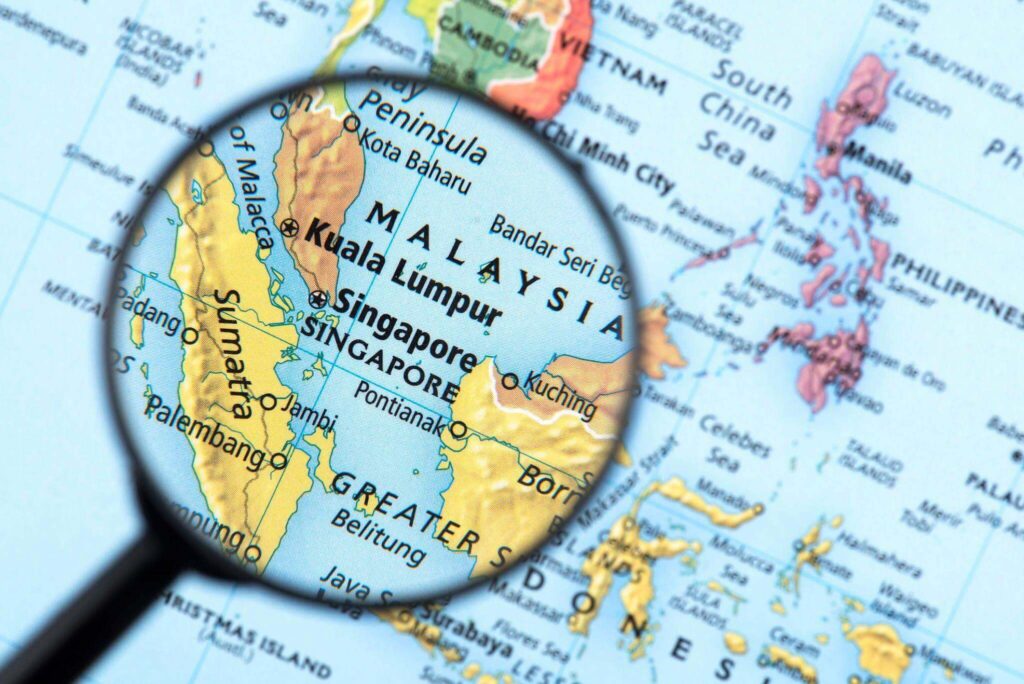
Singapore’s separation from Malaysia on 9 August 1965 was a watershed moment in Southeast Asian history. Initially joining the Federation of Malaysia in 1963, Singapore’s short-lived union with Malaya, Sabah, and Sarawak was marred by political, ethnic, and economic tensions. What began as an attempt at national consolidation rapidly unravelled into irreconcilable differences, culminating in Singapore’s expulsion—a rare case of a sovereign state being forcibly removed from a political federation. This article explores the historical context, causes of the separation, its consequences, and the remarkable trajectory of Singapore’s post-independence transformation.
Historical Background
Under British colonial rule since the 19th century, Singapore gained full internal self-government in 1959, with Lee Kuan Yew assuming office as Prime Minister. Seeking to secure its future through political consolidation, Singapore merged with Malaya, Sabah, and Sarawak in 1963, forming the Federation of Malaysia. However, the merger soon revealed deep structural and ideological differences. Economic competition, conflicting visions of governance, and racial tensions strained the federation. The ruling People’s Action Party (PAP) in Singapore clashed with Malaysia’s United Malays National Organisation (UMNO), culminating in a breakdown of cooperation and trust.
Key Causes of Separation
- Ethnic and Political Divergence
The demographic imbalance—Singapore’s majority Chinese population contrasted with Malaysia’s affirmative policies favouring ethnic Malays—created socio-political friction. The PAP’s vision of a “Malaysian Malaysia” promoting multiracial equality directly challenged UMNO’s pro-Malay agenda. - Economic Competition
Singapore advocated free trade and a competitive export-based economy, while the federal government in Kuala Lumpur pursued protectionist policies that disadvantaged Singapore’s commercial interests. Disputes over tax revenue sharing and trade agreements further exacerbated tensions. - Political Confrontation
The PAP’s decision to contest federal elections in Malaysia was perceived by UMNO as a direct threat. Political rivalry escalated beyond ideological disagreement into open hostility. - Ethnic Riots and Civil Unrest
The 1964 racial riots in Singapore, which resulted in deaths and widespread tension, were a stark indication of the fragile social fabric. The central government viewed Singapore as a liability to national stability.
On 7 August 1965, Malaysian Prime Minister Tunku Abdul Rahman proposed the expulsion of Singapore. The separation was formalised on 9 August, when the Malaysian Parliament passed a constitutional amendment removing Singapore from the federation.
Effects of the Transition
Economic Impact
- Upon independence, Singapore was perceived as economically vulnerable, lacking natural resources and facing regional uncertainty.
- Through effective leadership, strategic planning, and foreign investment, Singapore was rapidly transformed into a global trade and financial hub.
- Its strategic location along major shipping routes enabled the development of a world-class port and airport infrastructure.
- The Economic Development Board (EDB) facilitated industrialisation, while a stable regulatory environment attracted multinational corporations.
Political and Social Changes
- Singapore’s post-independence governance model emphasised meritocracy, efficiency, and rule of law, led by a strong central government.
- Policies aimed at racial harmony, such as the Ethnic Integration Policy and Group Representation Constituencies, sought to foster interethnic cohesion.
- National Service, bilingual education, and public housing schemes reinforced a unified national identity distinct from its Malaysian past.
International Responses
- Malaysia portrayed the separation as a necessary decision to prevent further instability. Despite initial bitterness, bilateral relations gradually stabilised.
- Western nations, including the United Kingdom and the United States, supported Singapore’s economic direction, strengthening diplomatic and commercial ties.
- Within the region, Singapore’s emergence as a stable and prosperous state was welcomed by ASEAN neighbours, with Singapore becoming a founding member of the association in 1967.
Conclusion
Singapore’s separation from Malaysia was born of political and ethnic discord, but its aftermath defied initial expectations. Far from collapsing, Singapore engineered a rapid and disciplined ascent into global prominence. By prioritising economic openness, social cohesion, and strategic governance, the city-state demonstrated that expulsion can, under extraordinary leadership and vision, become a catalyst for transformation. Today, Singapore stands not only as a sovereign success story, but also as a model of pragmatic nation-building in the post-colonial world.