
The Russia–Ukraine Conflict: Historical Legacy, Geopolitical Stakes, and Prospects for Resolution
Introduction
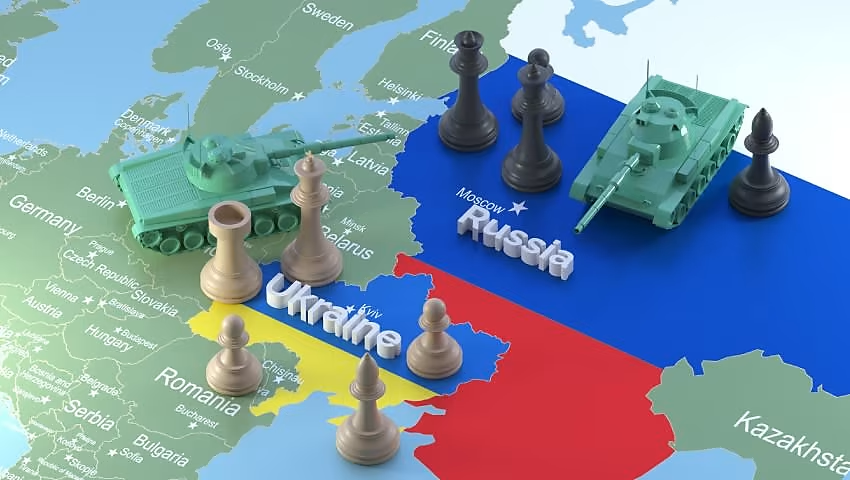
The Russia–Ukraine conflict, reignited by Russia’s full-scale invasion in February 2022, is the most significant military confrontation in Europe since the Second World War. It has reshaped regional security dynamics, redefined NATO’s role, and intensified global polarisation. Rooted in complex historical ties, competing sovereignties, and geopolitical rivalries, the war has resulted in widespread devastation, massive displacement, and international economic disruptions. This article provides a structured analysis of the conflict’s historical background, enduring challenges, global implications, diplomatic responses, and possible paths to resolution.
Historical Background
1. Imperial and Soviet Legacies
The territories of modern-day Ukraine and Russia share centuries of intertwined history, dating back to the Kievan Rus’, often cited by both nations as foundational to their national identity. Under the Russian Empire and later the Soviet Union, Ukraine was largely subordinated to Moscow’s control, despite periods of nationalist resistance and autonomy movements.
Following the collapse of the Soviet Union in 1991, Ukraine declared independence, gaining international recognition and retaining Crimea and the eastern Donbas region within its borders.
2. Crimea and the Donbas Crisis (2014)
Tensions escalated in 2014 when Russia annexed Crimea after Ukraine’s pro-Western revolution ousted President Viktor Yanukovych. Simultaneously, pro-Russian separatists, supported by Moscow, launched armed insurrections in the Donetsk and Luhansk regions, initiating a prolonged hybrid war.
A series of Minsk Agreements (2014–2015) aimed to de-escalate the conflict, but ceasefire violations and political deadlock persisted.
Persistent Barriers to Resolution
1. Disputed Sovereignty and Territorial Integrity
Russia claims to protect Russian-speaking populations and strategic interests, while Ukraine defends its sovereign borders, including Crimea and Donbas. Compromise remains politically untenable for both sides.
2. Military Escalation and Occupation
The 2022 invasion expanded the conflict into a full-scale war, with Russian troops occupying parts of southern and eastern Ukraine. Despite Ukrainian counter-offensives, heavy fighting continues, particularly in cities like Bakhmut, Kherson, and Avdiivka.
3. NATO and Western Involvement
Russia views NATO’s eastward expansion as a direct security threat. Ukraine’s aspirations to join NATO and the EU have become central to the conflict. Western support, while vital to Ukraine, fuels Russian hostility.
4. Misinformation and Propaganda
Competing media narratives and disinformation campaigns have polarised public opinion, both domestically and internationally, impeding diplomatic trust and civil society engagement.
5. War Crimes and Humanitarian Atrocities
Reports of mass civilian casualties, targeted infrastructure destruction, and alleged war crimes (e.g., in Bucha and Mariupol) have hardened Ukraine’s stance and complicated reconciliation efforts.
Regional and Global Consequences
1. European Security Order Disrupted
The conflict has revived Cold War-era divisions, pushing NATO to reinforce its eastern flank and leading Finland and Sweden to seek NATO membership.
2. Economic Turbulence and Energy Crisis
Sanctions on Russia and disrupted exports from Ukraine have:
- Triggered global energy shortages, especially in Europe
- Caused spikes in grain prices, impacting food security in Africa and Asia
- Led to global inflation and market instability
3. Refugee and Displacement Crisis
Over 7 million Ukrainians have fled abroad, with millions more internally displaced. The humanitarian burden has reshaped immigration policy across Europe.
4. Global Power Realignments
The war has strengthened alliances between:
- Russia and China, as strategic partners against Western dominance
- Western democracies, as NATO and the EU adopt more assertive policies
International Stances
Ukraine
Firmly defends its territorial integrity, demands complete withdrawal of Russian forces, and seeks international security guarantees and war crime accountability.
Russia
Frames the war as a “special military operation” to counter NATO aggression and defend Russian-speaking populations, asserting sovereignty over annexed territories.
United States and NATO
The U.S. and NATO allies have provided billions in military and economic aid, viewing Ukraine as a frontline of democratic defence against authoritarian expansionism.
European Union
The EU has supported Ukraine with aid, refugee resettlement, and accelerated its candidate status for EU membership, while imposing severe sanctions on Russia.
China, India, and the Global South
These actors have largely adopted non-aligned positions, calling for peace while maintaining economic relations with both Russia and the West.
Prospects for Resolution
1. Military Victory vs. Negotiated Settlement
The war’s trajectory remains uncertain. A decisive victory by either side appears unlikely in the short term, raising the possibility of a protracted conflict or frozen frontlines.
2. Ceasefire and Demilitarised Zones
A negotiated ceasefire may include buffer zones, international monitors, and demilitarisation agreements, though enforcement remains a major challenge.
3. Security Guarantees and Neutrality Options
Potential models include Ukrainian neutrality paired with binding international security assurances. However, these models face domestic opposition and historical mistrust.
4. Post-Conflict Reconstruction and Justice
Future peace will require:
- Rebuilding Ukraine’s economy and infrastructure
- Establishing transitional justice for war crimes
- Ensuring the rights and reintegration of displaced populations
Conclusion
The Russia–Ukraine war is a defining moment in 21st-century international relations, testing the resilience of the post–Cold War order, European security, and the credibility of multilateral institutions. While military and diplomatic paths remain contested, the long-term peace will depend on a recalibrated global security architecture, sustained humanitarian support, and mutual recognition of sovereignty and justice. Until such conditions emerge, the conflict is likely to remain a prolonged and destabilising force in international politics.